Construction Debris Disposal Rules Every Fort Smith Homeowner Should Know
If you're planning a remodel, a roof tear-off or a new build in Fort Smith, there's a local reality worth understanding before you start, because it decides how your debris has to
In this guide
- The rule that catches people out
- Why you can't just burn it
- The river and the ground make it matter more
- Where the debris actually goes
- How a roll-off solves it
If you're planning a remodel, a roof tear-off or a new build in Fort Smith, there's a local reality worth understanding before you start, because it decides how your debris has to leave the property - and burning it, the old shortcut, is prohibited for construction waste under Arkansas DEQ rules.
The rule that catches people out
Fort Smith runs curbside trash pickup, and the Sebastian County Regional Solid Waste District operates recycling drop-offs and a household hazardous waste facility. All of it is genuinely useful - for household trash, recyclables and chemicals. What none of it takes is construction and demolition debris: drywall, framing, flooring, shingles, old fixtures, brick and concrete.
That surprises people, because household trash and recycling do get handled. But a project's debris is a different category, and in Arkansas it goes to the City of Fort Smith regional landfill on Commerce Road - a regional landfill that accepts construction and demolition material from across the area.
Why you can't just burn it
Burning construction debris used to be the country solution, but Arkansas DEQ rules prohibit open burning of construction and demolition waste outright. The rules are enforced, and a complaint or a drift of smoke over a property line can bring a notice of violation.
Treated wood makes it worse - pressure-treated lumber releases toxic compounds when burned, so decking, fencing and treated framing can't go on a fire anywhere in Arkansas. The container is the clean, legal route.
The river and the ground make it matter more
Fort Smith sits on the Arkansas River, and keeping debris and sediment out of the river and its tributaries is part of doing a job properly here. A pile of debris that washes in a storm is a problem; a covered container isn't.
The heavy River Valley clay and the rocky uplands add a twist too - a footing or foundation dig brings up dense, wet clay or broken rock that fills a container's weight limit fast, so heavy material is sized separately from the light debris.
Where the debris actually goes
Construction and demolition debris from a Fort Smith project goes covered to the City of Fort Smith regional landfill on Commerce Road. Clean concrete and metal can often be recycled rather than landfilled, and tires, Freon appliances and household hazardous waste route to their own places.
A local hauler knows those runs and folds them into one flat price, so you don't have to make a study of the county's rules.
How a roll-off solves it
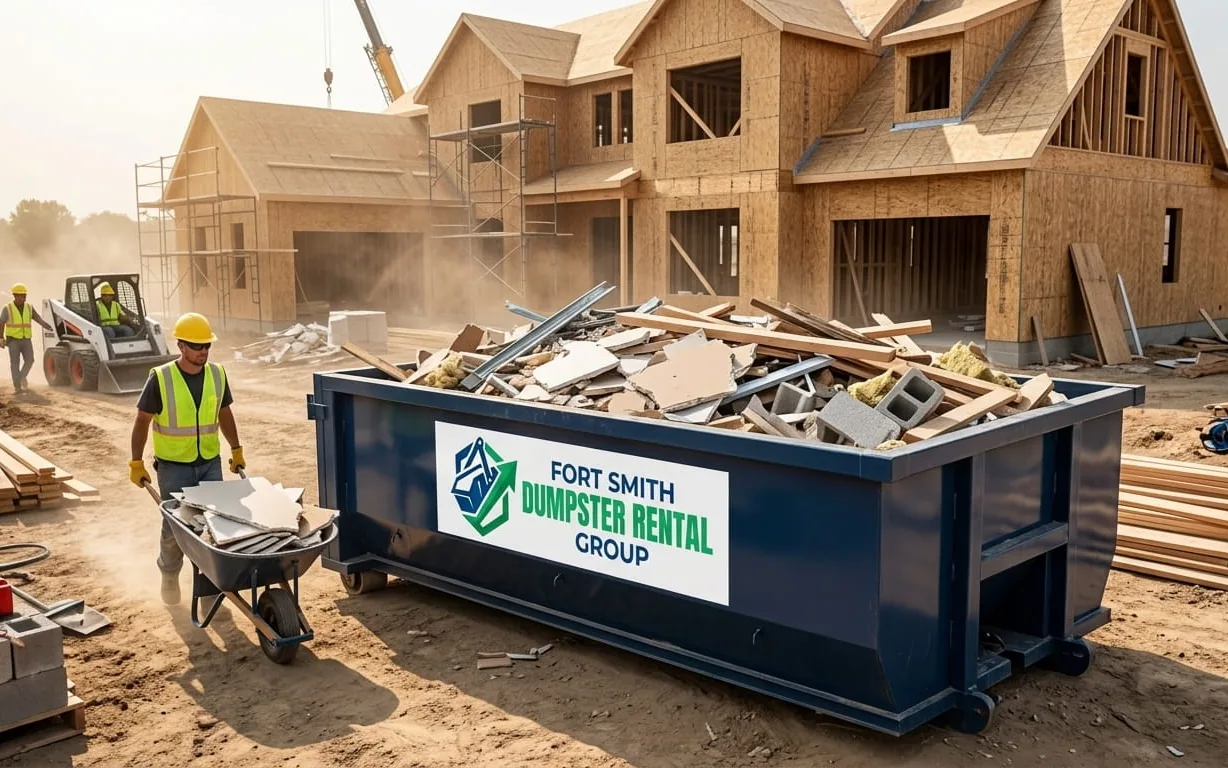
A roll-off on the driveway is simply how a real project's debris leaves the property legally and in one pass - hauled covered to the regional landfill, with the prohibited items routed elsewhere.
Tell us what you're clearing and we'll size the container, handle the disposal and keep the whole thing to one predictable number.
Book a container in Fort Smith
One flat rate covering delivery, seven days, pickup and disposal.
(479) 259-2770Questions readers ask about this
Can I put construction debris out with Fort Smith curbside pickup?
No. Curbside pickup and the county recycling drop-offs take household material - not construction and demolition debris. That goes to the regional landfill on Commerce Road, and a roll-off is the practical way to get it there.
Can I burn construction debris in Fort Smith?
No. Arkansas DEQ rules prohibit open burning of construction and demolition waste, and treated wood can't be burned anywhere in Arkansas. A container is the legal route.
Where does the debris end up?
At the City of Fort Smith regional landfill on Commerce Road, which accepts C&D from across the area. Clean concrete and metal can often be recycled instead, and we route tires, Freon appliances and hazardous items to the right place.
Do I need to separate anything?
Yes - household hazardous waste, tires and Freon appliances can't go in the container. We tell you exactly what to set aside before we load.
Related reading
More guides
- What Size Dumpster Do I Need in Fort Smith?
- Do I Need a Dumpster Permit in Fort Smith?
- Where Your Debris Actually Goes in Sebastian County
- All guides